
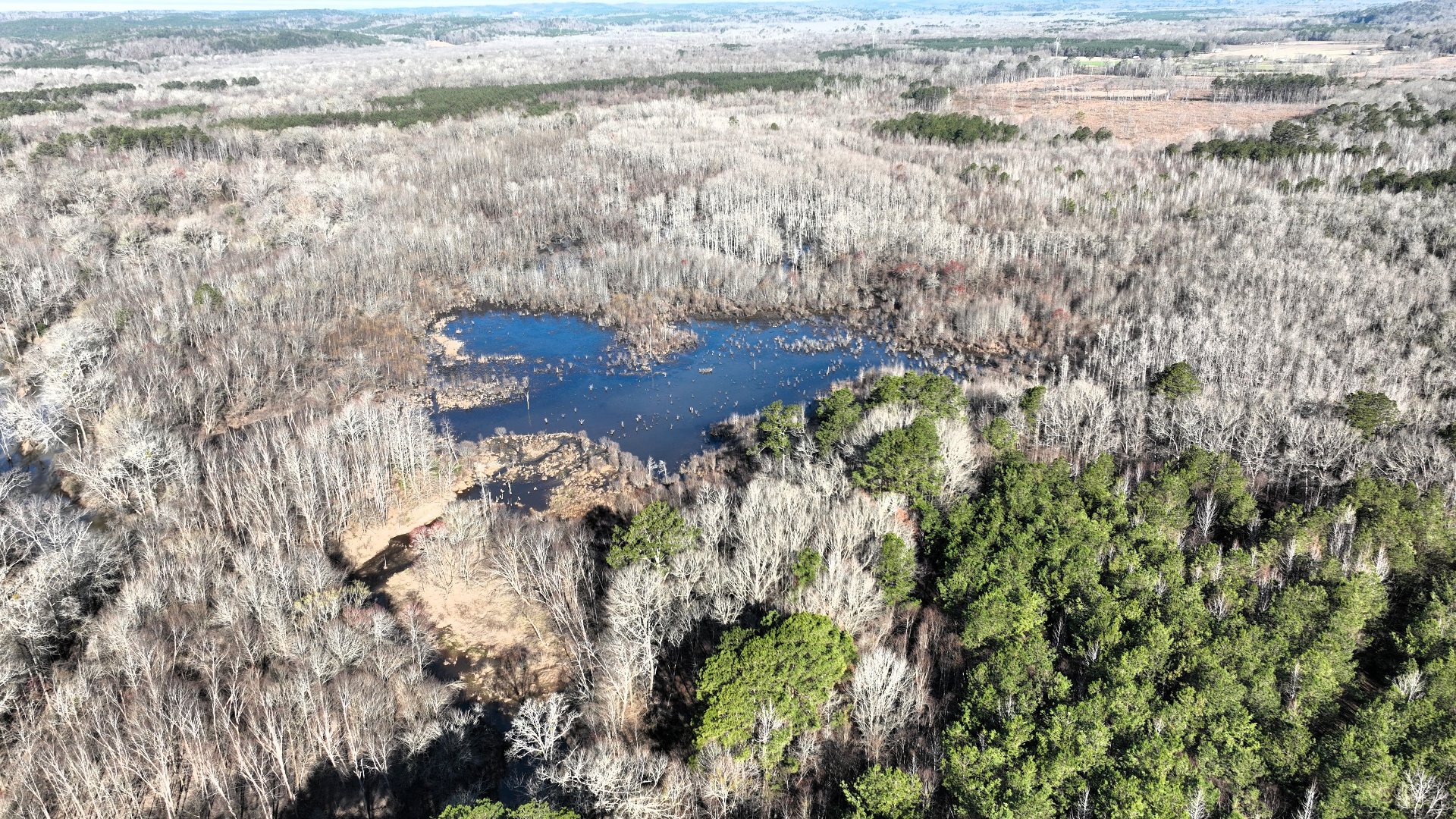
Storm-damaged timber loses value fast. The clock that matters most after a hurricane, tornado, or ice event in Mississippi and Alabama is the one ticking on stain, decay, and beetle infestation in the down wood — not the one ticking on the insurance claim.
This Field Note covers what salvage timber sales actually look like in this region, how the decision window narrows by the week, why mill capacity collapses faster than landowners expect, and the contract structure that protects you when buyers know you are under pressure.
The Salvage Decision Window
For pine sawtimber in Mississippi and Alabama, the practical salvage window is roughly:
- Weeks 1–2: Most down sawtimber still grades as sawtimber if it can be moved.
- Weeks 3–6: Bluestain begins penetrating sapwood. Sawtimber starts grading down to chip-n-saw or pulpwood.
- Weeks 6–12: Southern pine beetle and Ips beetle pressure peak in the down wood and the residual stand. Decay starts in earnest in warmer months.
- After 90 days: Most pine sawtimber that has not been moved is sold as pulpwood at best. Significant volume often becomes unmerchantable.
Hardwood salvage windows are slightly longer in cool weather but shorter in summer. Decisions should be made within days of the event, not weeks.
The Mill Capacity Reality
The single most misunderstood element of post-storm salvage is mill capacity. After a major event in the Pine Belt or the Black Belt — Hurricane Katrina, Hurricane Zeta, the 2017 Lauderdale County tornado, the 2020 Easter outbreak — mills do not magically expand to absorb the down volume.
What actually happens:
- Mills near the damage zone fill their yards within days.
- Prices for salvage wood drop sharply once yards are full.
- Mills outside the damage zone may take wood but only at a haul penalty that the landowner ultimately pays.
- Pulpwood markets fill faster than sawtimber markets because the pellet, pulp, and chip yards are smaller.
The landowners who get the best salvage outcomes are the ones who move first — usually within the first week — before the wood pile at the local mill closes the bid window for everyone else.
What a Salvage Cruise Actually Looks Like
A normal timber cruise measures standing volume. A salvage cruise is different: it inventories down volume, broken-tops, hung-up trees, and the residual stand condition, and it produces a separate value for each.
The cruise should report:
- Down sawtimber volume by species and product class.
- Estimated grade loss timeline (how fast value falls if not moved).
- Standing damaged volume — leaners, broken tops, split butts.
- Residual stand stocking after salvage removal.
- Beetle hazard rating for the residual stand.
That single document is what allows the landowner, the consulting forester, and any insurance adjuster to make defensible decisions on the same set of facts.
Salvage Sale Structure
Salvage sales almost always run on a per-ton (pay-as-cut) basis. The reason is simple: nobody on either side of the table can credibly cruise down wood for a lump-sum number. Per-ton sales let the landowner be paid for what actually moves, at the prices set in the contract.
Key contract elements for salvage:
- Per-ton prices by product class set at execution, with no floating-market adjustments.
- Scale-ticket audit rights for the landowner's forester.
- Hard performance window (typically 60–120 days, not 12 months).
- Defined start date — buyers cannot sit on the contract while you watch the wood degrade.
- Residual stand protection clauses to prevent damage during salvage operations.
Several of these clauses are explained in detail in Timber Contract Clauses That Protect Landowners.
Beetle Pressure After the Storm
Down pine, broken tops, and stressed residual trees are beetle bait. Within 4–8 weeks of a major event in Mississippi or Alabama, Ips engraver beetles and (sometimes) southern pine beetles begin moving from down wood into adjacent green stands. Salvage planning that ignores beetle pressure ends up costing more in residual mortality than the storm itself did.
That is why the salvage prescription often includes:
- Removal of all down sawtimber within reach of equipment.
- Removal of severely leaning, split-butt, or major broken-top trees.
- Targeted removal of stressed trees inside identified beetle pockets.
- A thinning-grade pass on overstocked residual stands within 12 months.
Insurance, Casualty Loss, and the Appraisal
Two financial mechanisms exist after a casualty: insurance (if you carry it) and the IRS casualty-loss deduction. Both require a documented before-and-after value. A storm-damage timber appraisal establishes:
- Pre-storm fair market value (basis or stepped-up basis as applicable).
- Post-storm fair market value of standing and recoverable timber.
- The casualty-loss number a CPA needs for IRS Form 4684 and a Schedule T.
This appraisal is independent from the salvage sale itself, and it must be prepared by a registered forester to hold up.
Where Storm Salvage Hits Hardest in Our Service Area
Gulf-exposed Mississippi counties — Greene, George, Perry, Forrest, Marion — see the highest hurricane risk. Alabama coastal counties from Mobile through Baldwin and Washington carry the same exposure. Tornado-driven salvage events have hit every part of our service area, with east-central Mississippi (Lauderdale, Neshoba, Kemper) and west Alabama hit particularly hard in the last decade.
What Not to Sign
Buyers know storm-pressured landowners are vulnerable. Three contract terms to refuse:
- "Whole tract" lump-sum salvage offers made without a cruise.
- Open-ended performance windows. A salvage contract with 12 months to perform is a buyer option, not a salvage sale.
- "Trust-me" pricing that adjusts to "current market" without a price floor in the contract.
The Right First Call
The right first call after a major storm is not to a logging crew or a mill buyer. It is to a registered forester who can cruise the damage, set a sale strategy, and put a defensible contract in front of qualified buyers — fast. That is the work covered by our Mississippi timber sales service and the Mississippi consulting forester practice generally.